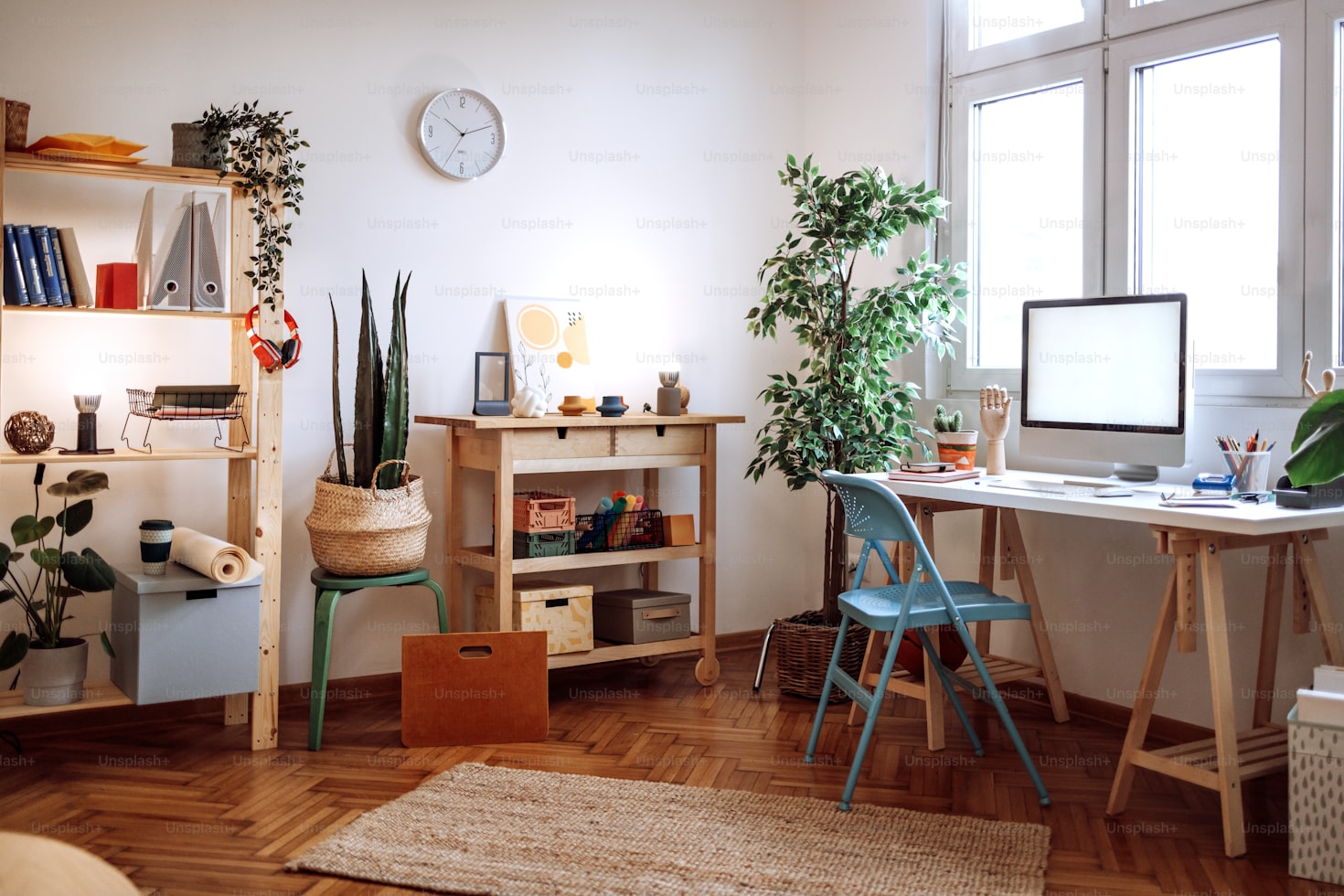
Let's be honest: working from home has its perks— no commute, comfy pants, and the ability to make a cup of coffee whenever you want. But it also has its challenges, especially when it comes to creating a workspace that's both comfortable and productive. I remember when I first started working from home; I tried to work from my couch, my bed, even the kitchen table. Nothing felt right until I created a dedicated home office space that was designed just for work.
Today, I'm sharing my best tips for creating a comfortable, functional home office that will help you stay focused and productive— while still feeling like a part of your home.
Choose the Right Location
The first step in creating a great home office is choosing the right location. Ideally, you want a space that's separate from your living areas— a spare bedroom, a corner of your living room, or even a converted closet. The key is to create a physical boundary between work and home life.
I'm lucky enough to have a small spare bedroom that I converted into my office, but I know not everyone has that luxury. If you're working in a shared space, consider using a room divider or a bookshelf to create a sense of separation. I also like to use a different light fixture or lighting scheme in my office area to help signal to my brain that it's time to work.
Natural light is a huge plus! If possible, choose a location with a window— the natural light will boost your mood and productivity. Just make sure to position your desk so you're not facing direct sunlight, which can cause glare on your computer screen.
Invest in a Good Chair
Let's talk about chairs— because if you're going to be sitting for hours at a time, you need something comfortable and supportive. I made the mistake of using a cheap dining chair when I first started working from home, and my back paid the price. A few months in, I invested in a quality ergonomic chair, and it was a game-changer.
When choosing a chair, look for one with adjustable height, lumbar support, and armrests. You should be able to sit with your feet flat on the floor and your knees at a 90-degree angle. Trust me, your back will thank you!
Create a Functional Desk Setup
Your desk is the centerpiece of your home office, so it's important to choose one that's both functional and stylish. I have a large L-shaped desk that gives me plenty of room for my computer, monitor, keyboard, and other essentials. I also added a few desk organizers to keep my pens, paper clips, and other small items tidy.
Ergonomics are key here too! Your monitor should be at eye level, and your keyboard and mouse should be at a height that allows your elbows to be at a 90-degree angle. If you're using a laptop, consider getting a separate monitor or a laptop stand to help improve your posture.
Lighting Matters
Good lighting is essential for any workspace. Natural light is best, but you also need good task lighting for when it's dark or cloudy. I have a desk lamp with adjustable brightness and color temperature— I like using warm light for reading and cool light for focused work.
Avoid harsh overhead lighting, which can cause eye strain and headaches. If you have a ceiling light, consider adding a dimmer switch so you can adjust the brightness throughout the day.
Personalize Your Space
Just because it's a workspace doesn't mean it has to be boring! Add a few personal touches that make you happy and inspired. I have a small plant on my desk, a few framed photos of my family, and a motivational quote on the wall. These little things make my office feel like mine, which helps me stay motivated and focused.
Creating a comfortable, productive home office is all about finding what works for you. By focusing on location, ergonomics, lighting, and personalization, you can create a workspace that helps you do your best work— while still feeling like a part of your home. You've got this!