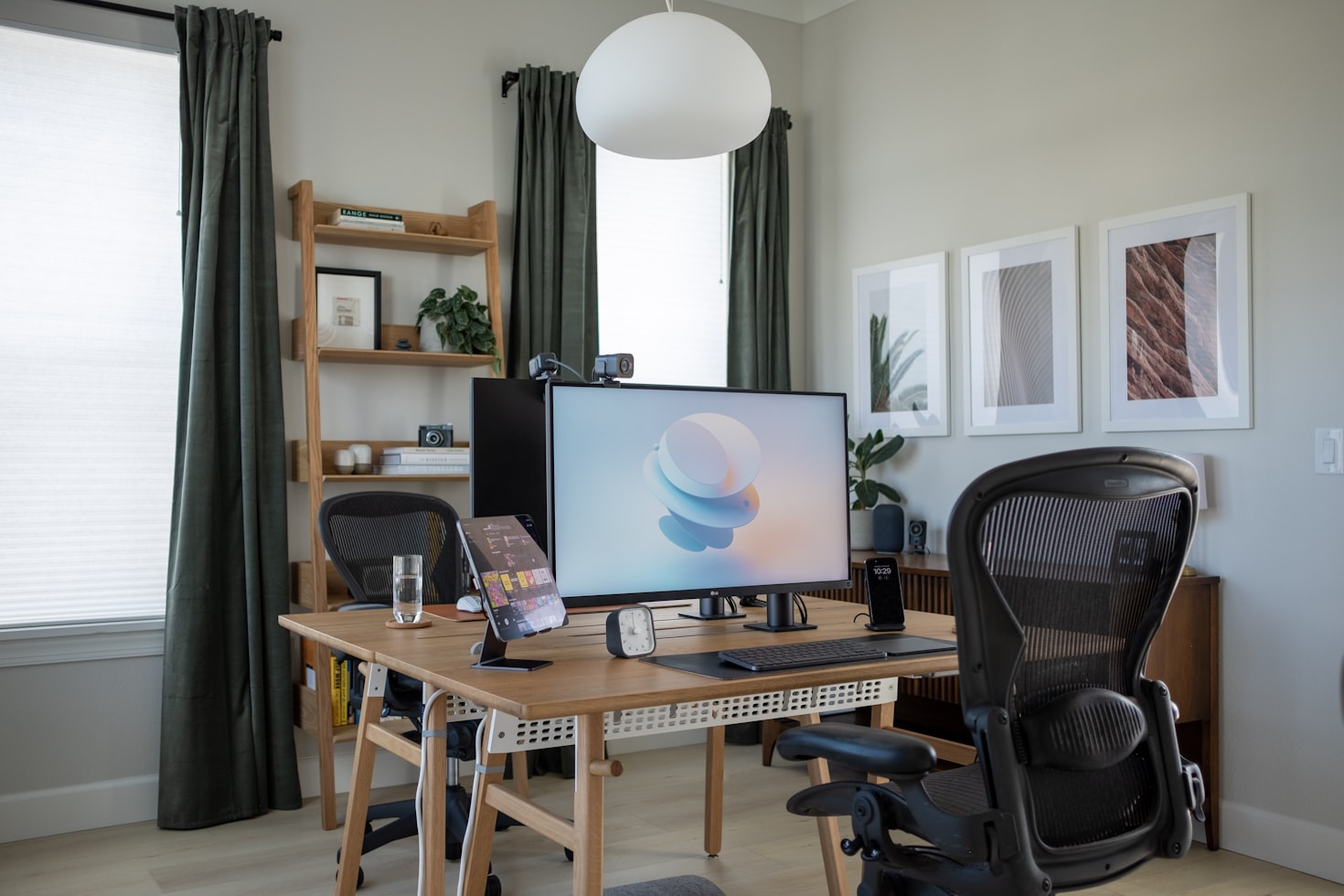
With more people working from home than ever, the home office has become a critical part of the modern household. But optimization isn't just about the equipment; it's about the flow and feeling of the space. A truly optimized office supports your work habits and helps you maintain a healthy work-life balance.
I spent months working from a cramped corner of my living room before I realized that my environment was actively working against me. Once I optimized my space—adding proper storage, improving the lighting, and creating physical boundaries—my productivity improved dramatically and my stress levels dropped.
Establish Boundaries
If possible, your office should be a dedicated room with a door. This provides a physical and mental boundary between 'work time' and 'home time'. If you have to work in a shared space, use a room divider or a rug to define the office area, and commit to leaving that space when your workday is over.
When I didn't have a separate room, I used a folding screen to create a visual boundary. At the end of the day, I'd close the screen, and it was like putting my work away. This small ritual helped my brain transition from work mode to relaxation mode, which is essential for avoiding burnout.
Invest in Quality Tech
A slow computer or a spotty internet connection is a major productivity killer. Ensure your tech is up to date and your Wi-Fi signal is strong in your office area. Use a second monitor to increase your screen real estate—it's one of the easiest ways to boost your efficiency when multitasking.
Adding a second monitor was the single biggest productivity boost I've ever experienced. Being able to have my research on one screen and my writing on another eliminated the constant window-switching that was slowing me down. It's a relatively small investment with an enormous return.
Incorporate Movement
Don't stay seated all day. A standing desk or even a simple timer that reminds you to stretch every hour can make a huge difference in your energy levels. Creating a space that encourages you to move helps prevent the fatigue and stiffness that often comes with long hours at a desk.